When to upgrade your mic — and when you really shouldn't
A buyer's guide for podcasters, streamers, and meeting-heavy professionals — and the three signals that mean you are not the bottleneck.
The "I need a better microphone" instinct is usually wrong. Most audio problems are environment problems wearing a microphone costume. Here is a way to diagnose which is which, and a small set of mics worth the money when the upgrade is real.
Diagnose first
Open a free DAW (Audacity, GarageBand). Record yourself reading a paragraph in your normal voice from your normal position with your current mic. Listen back with headphones. If you hear:
- Roominess (an echo behind your voice): room problem. Buy a rug, a soft throw, or a foam panel before a new mic.
- A hiss or hum under your voice: cable, interface, or power problem. Try a different USB port or a different cable.
- A muffled, blanket-on-the-mic sound: position problem. You are six inches further from the mic than you think.
- A thin, sibilant sound: actual mic problem. The upgrade is warranted.
In practice, three out of four "I need a better mic" problems end with a rug, not a mic.
When to upgrade — the three signals
- You record more than once a week, professionally.
- You have already treated the room you record in (soft surfaces in three places, hard surfaces in none of the reflective ones).
- You can name the deficiency in your current recording in a single sentence.
If you cannot name what is wrong, a new mic will not fix it.
What to buy when the upgrade is real
The category has settled. Three mics cover 95% of creator setups:
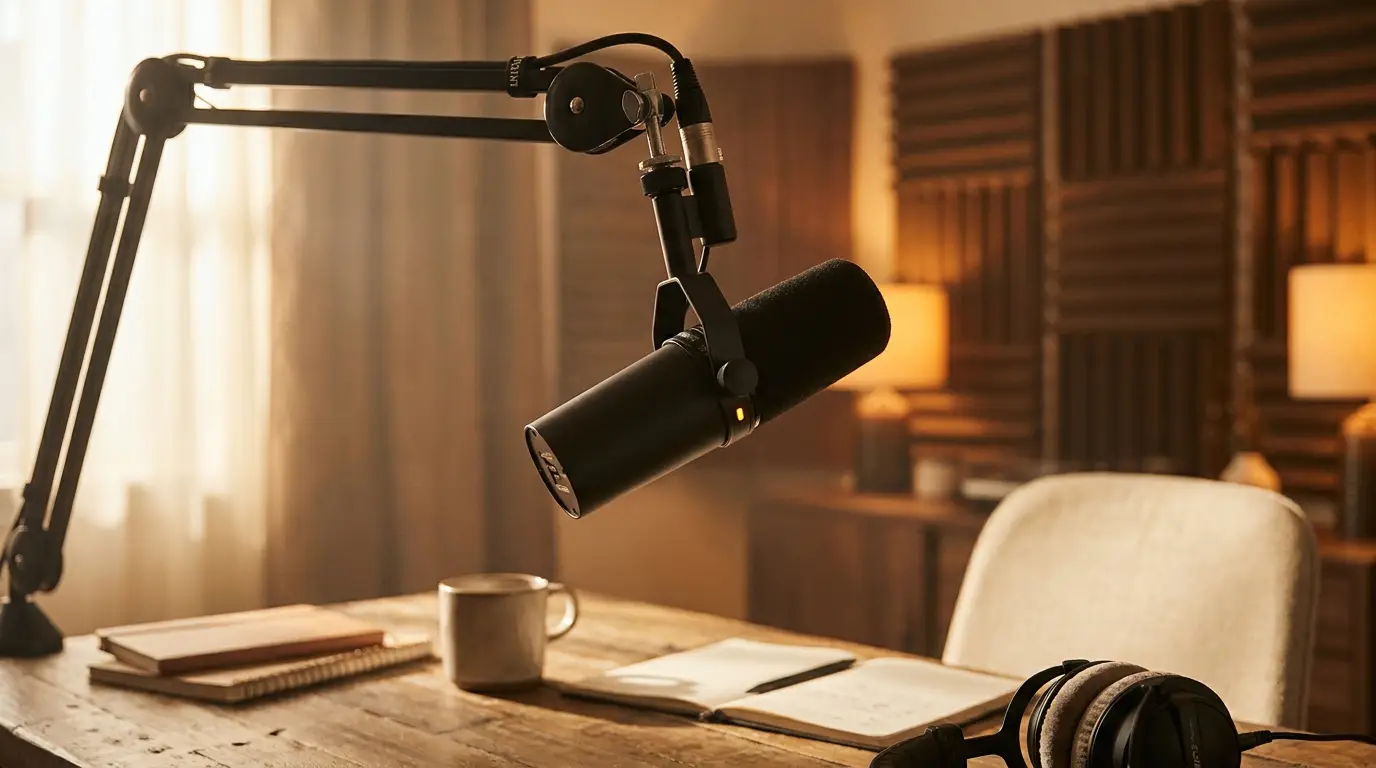
A dynamic broadcast mic (Shure SM7dB or close clone)
For podcasts and streams in untreated rooms. Forgiving, picks up less room sound, makes voices sound serious. Needs a real interface or an in-line preamp. The expensive choice that lasts a decade.
A small condenser (Rode NT1 or close)
For carefully treated rooms, narrated video, voiceover. Captures more nuance — and more of the lawnmower outside. Cheaper than the dynamic option, but the room has to be ready.
A wireless lav system (Rode Wireless GO II / III, DJI Mic)
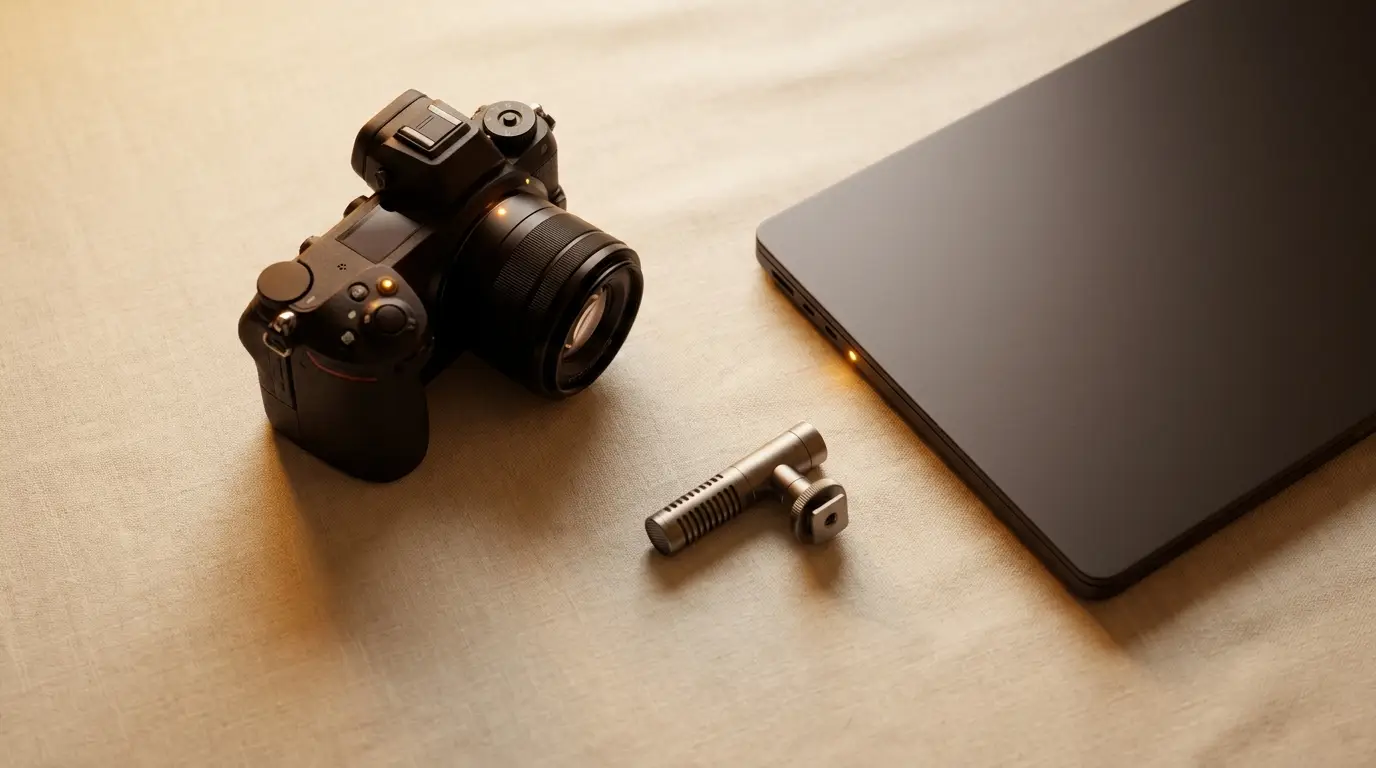
For movement, vlogs, interviews. The category has matured enormously: two transmitters, a battery case, and a 3.5mm output is now under 250 USD. The mic that travels, every creator should own.
Things to stop spending money on
- Multiple capsule patterns for a vocal mic (you will use one for ten years).
- "Streamer" RGB-lit mics. The capsule inside is the cheapest possible.
- Software "AI noise reduction" subscriptions. The free ones in your DAW are already 90% as good.
A final calibration
If you can record a clean voice memo on a phone in the room you record in, your room is ready. If you cannot, your mic is not the problem yet.