The ambient computing era is already here
Ambient computing is no longer speculative. A look at sensors, projections, and small radios quietly remaking the way rooms behave.
For two decades, "ambient computing" was a phrase used to describe a future that never quite arrived. In 2026, it arrived without an announcement. Not as a single device or platform, but as a slow accumulation of small ones — sensors, radios, projections, and quiet protocols — that have started behaving as a single environment.
What changed without anyone saying
- Matter shipped. Devices from different brands actually pair, finally.
- Thread and UWB are everywhere — low-power, room-aware radios with sub-meter precision.
- NPUs landed in light switches and door locks, not just phones.
- Every "AI" is a small one running locally — and good enough.
What it feels like
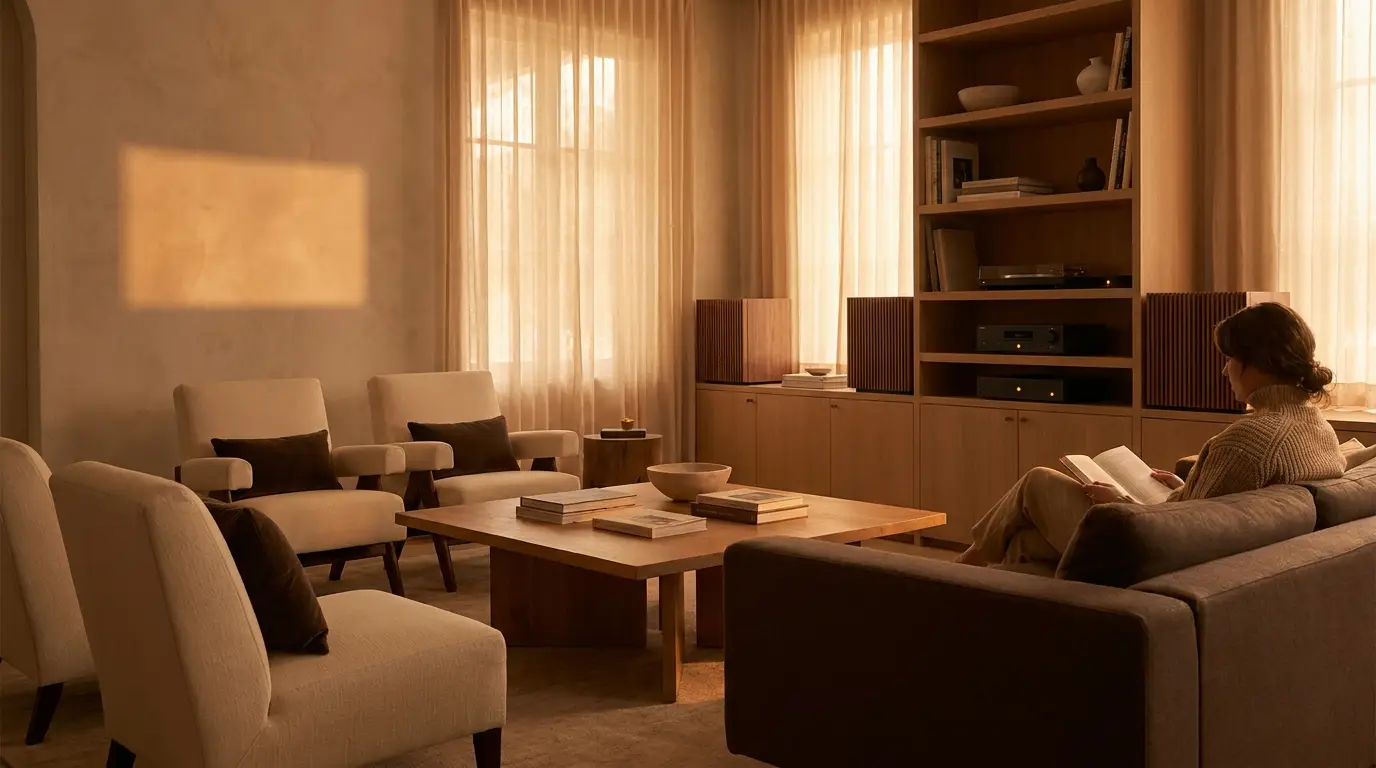
You walk into a room. The lights settle to whatever brightness suits the time. A scene of music starts on the closest speaker, not all of them. Your phone has handed off to the wall display because the wall is closer. None of this announces itself. The screen is no longer the center; it is one peripheral in a room of them.
A few categories worth watching
Surface-aware projection
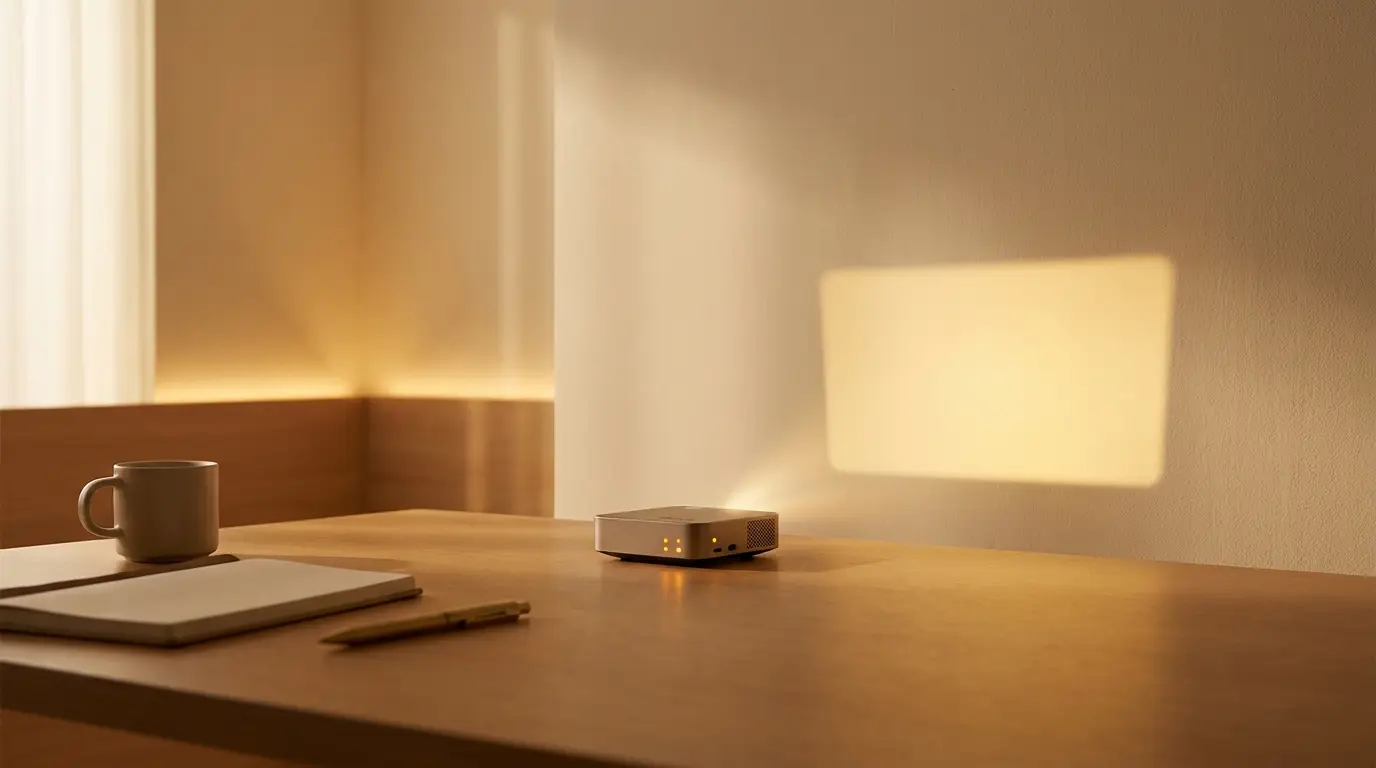
Tiny laser pico-projectors paired with depth sensors can paint a usable interface onto a wall or a kitchen counter. Resolution is fine. The interesting work is in the interaction model — gestures, taps, and the room recognising whose hand is whose.
Pressure and presence
Floor-embedded pressure mats and ceiling-mounted radar both detect occupancy without cameras. Privacy-first, dataset-light. The smart-home routines built on top of them are dramatically better than motion-PIR-based ones — they know when someone is sitting still, reading, sleeping, or absent.
The room as a server
The most interesting hardware is the most boring: tiny pocket-sized hubs running open-source automation stacks. They are cheap, replaceable, and never talk to a vendor cloud unless you ask. Home Assistant, Matter, ESPHome — the unglamorous foundation everything quietly sits on.
What still feels early
Multi-user state. A room knows you are there; it does not always know which "you". And cross-vendor scenes still break in unhappy ways at the edges. But the trend line is steep — every twelve months, the ambient layer is meaningfully more confident than the last.