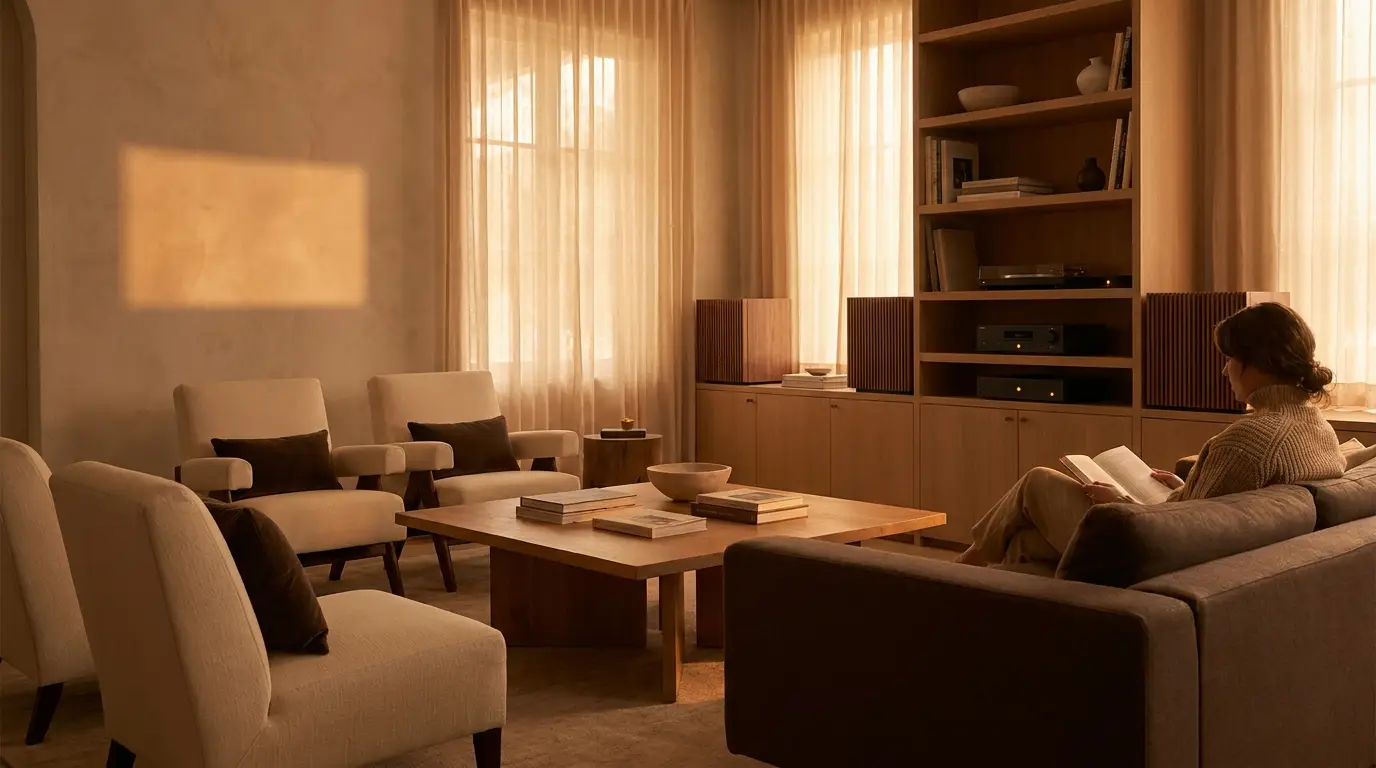
Spatial computing without the goggles
Headsets are not the only path to spatial UI. Pico-projectors, NFC-anchored screens, and depth-aware desk lights are all quietly remaking the room.
When people say "spatial computing" they usually mean a headset. Goggles get the headlines, but the more interesting form of spatial UI in 2026 lives in pieces of hardware that do not strap to your face. A short tour of what is quietly arriving.
The desk lamp that knows where the desk is
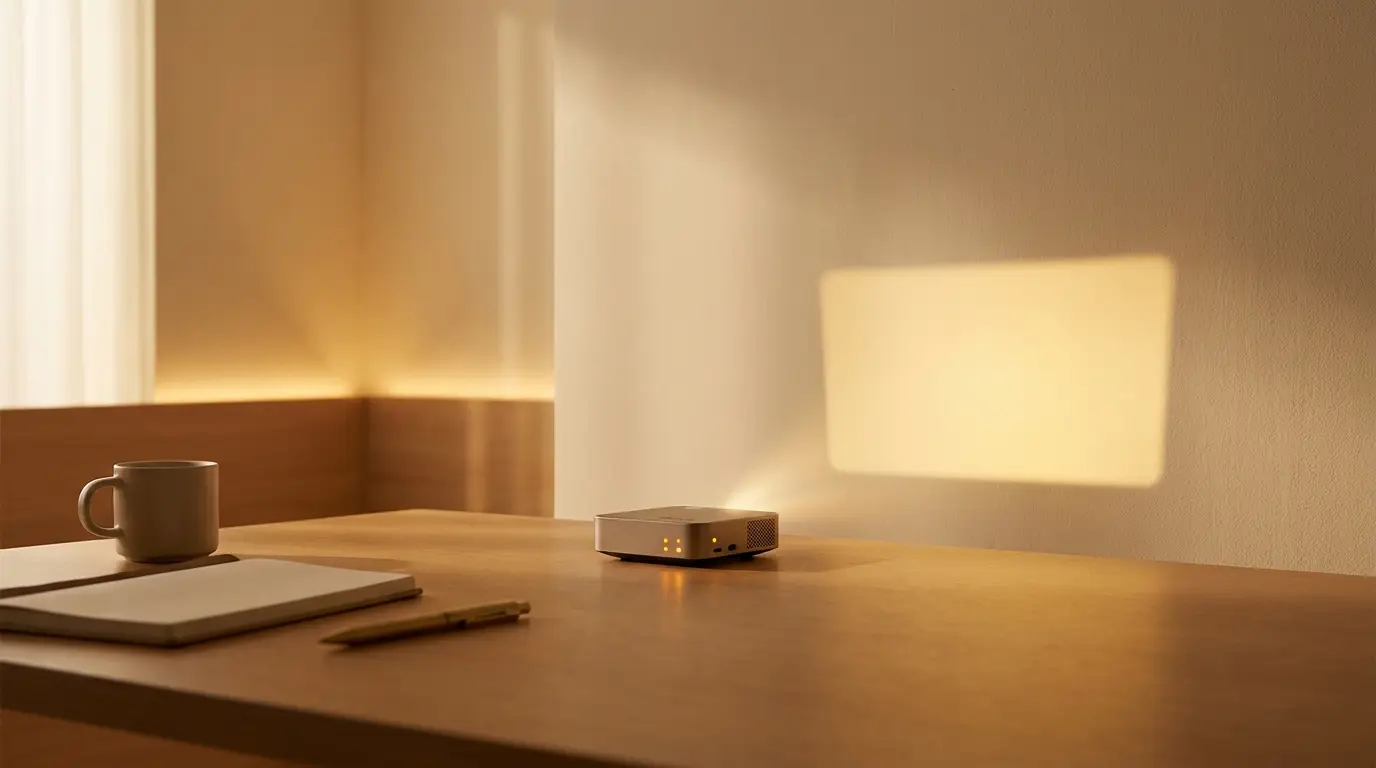
A new generation of work lamps contains a depth sensor and a tiny projector. It dims when your hands enter the workspace. It can paint a small interface onto a corner of the desk — a clock, a notification badge, a timer — without ever taking over the room. The trick is the calibration: it learns your desk in ten seconds and stays out of your way otherwise.
NFC-anchored screens
A glass coaster on the kitchen counter. Tap your phone to it. The recipe lands on the small screen embedded in the wall above. Tap again and it is gone. The "screen" is one of many in the kitchen. The phone is the input device. The room is the canvas.
This pattern — content lives in the room, control lives in the phone — is starting to feel right. It is the inverse of the smart-display puck that tries to be everything at once.
Pico-projection in the kitchen
A 100-lumen laser projector with a depth sensor mounted under a cabinet. It paints recipe steps onto the counter where you are working. It moves as you move the chopping board. It has no microphone, no camera, no account. It only paints what you tell it to paint.
This is the demo worth coming back to. Not because it is revolutionary in any single moment — but because the room stays a room. The kitchen does not become a touchscreen. The cabinet stays a cabinet.
What headsets do better
Three things, honestly: immersive single-user experiences (gaming, watching a film alone), professional 3D work (CAD, architectural review), and certain training scenarios. None of these is a daily-living use case. The case for headsets in everyday life remains weak.
What headsets do worse
Anything that involves another person in the room. Anything that involves the kitchen. Anything that involves walking to the door. Spatial UI in the home cannot require strapping a thing to a face for 30 seconds at a time.
The quiet implication
The post-headset spatial computing story is already arriving — through lamps, coasters, and tiny projectors. None of it will be marketed as "spatial computing." All of it will quietly accumulate, like Wi-Fi did. By 2030 we will look back and notice the room is full of inputs that nobody calls "AR."
The interesting designers in this space are working on hardware that disappears. The headset companies are working on hardware that disappears your living room. Different bets. The first one looks much more likely.