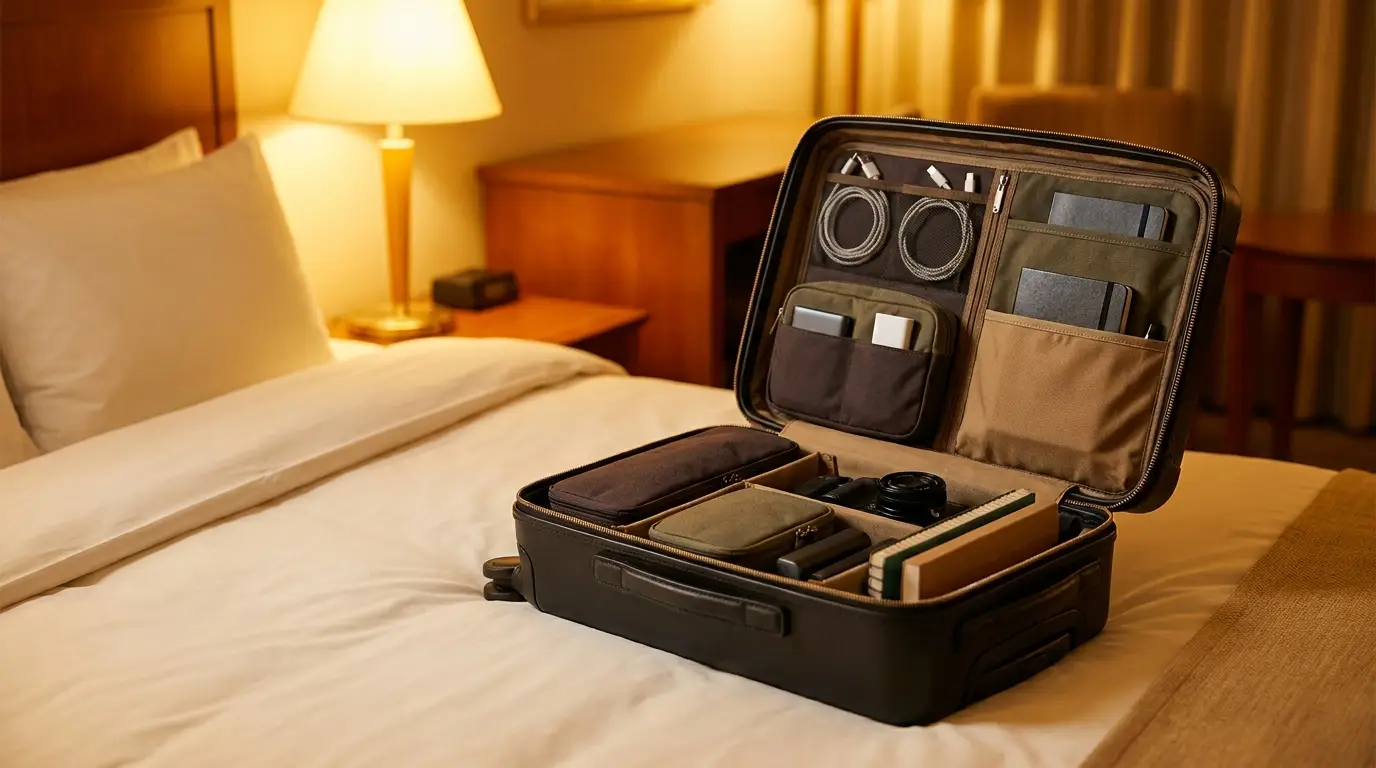
Travel tech that eases small airport frustrations
Airports rarely fail in big ways. They fail in small, repeated ones — a phone that dies at the gate, a tangle of chargers, a bag you cannot locate. A look at the gear that removes those frictions.
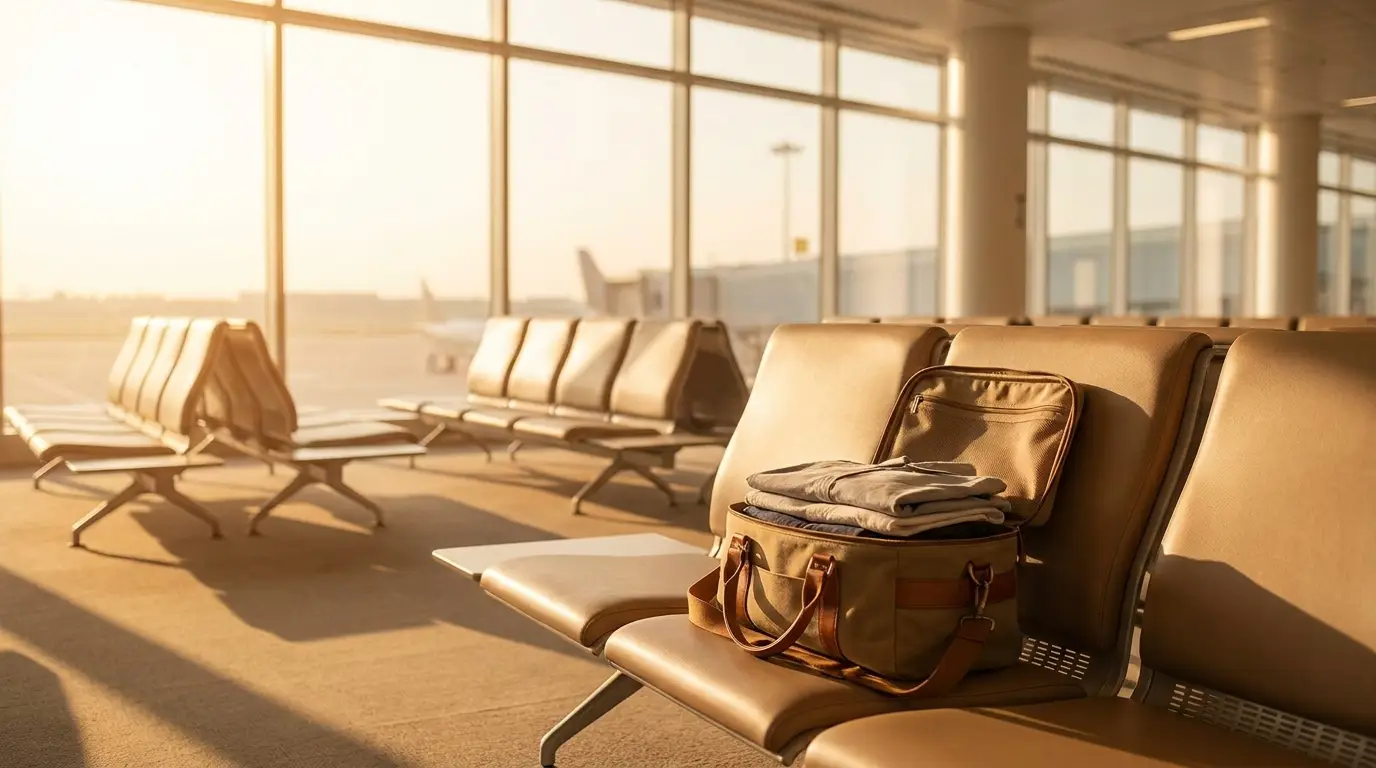
Airports are rarely ruined by a single disaster. They are worn down by a series of tiny frictions: a phone at 4% before a long flight, a charging brick that only fits one device, a carry-on that has to be unpacked at security, a checked bag that vanishes into the system. None of these is a crisis. Together, they turn travel into low-grade stress.
The useful travel gear is the gear that removes those small frictions quietly. It is not exciting, and it is not about having the most gadgets — it is about carrying a few reliable things that each delete one recurring problem.
The real problem: friction, not catastrophe
Most travel-tech lists optimize for novelty. The better filter is frequency: which annoyance happens on almost every trip? Charging anxiety, plug incompatibility, cable chaos, and the quiet worry about a bag's location top that list for most travelers. Solve those four and a travel day gets noticeably calmer.
Why it is worth solving
Travel friction compounds. A dead phone is not just inconvenience — it is a missing boarding pass, map, and translation app at the worst moment. A bag with no tracker is a day of uncertainty. Spending a little on the right reliable gear converts recurring anxiety into a routine that mostly takes care of itself.
The categories that actually help
Four categories cover most airport friction: one charger for everything, a power reserve that is airline-legal, a way to know where a bag is, and a way to keep the kit itself from becoming the mess.
Anker GaN wall charger (multi-port)
- The problem it addresses
- Separate bricks for a phone, tablet, and laptop mean three plugs and a tangle in every hotel room.
- Why it may help
- A compact GaN charger fast-charges a phone and a laptop from a single outlet, and runs cooler under load than older bricks. Anker is one of the most consistently well-regarded charging brands.
- Check before buying
- Total wattage (look for ~65W+ if charging a laptop); number and type of ports; that it supports your laptop's fast-charge standard.
Anker USB-C power bank (airline-safe capacity)
- The problem it addresses
- Outlets at the gate are scarce and often broken, and a long travel day outlasts a phone battery.
- Why it may help
- A 20,000 mAh USB-C power bank with a built-in cable covers one to two full phone charges and still stays within airline carry-on limits. A widely owned, well-reviewed Anker model.
- Check before buying
- Capacity in Wh stays under the 100Wh carry-on limit (20,000 mAh ≈ 72Wh, which does); USB-C is input and output, so it charges devices directly; weight, since it rides in the bag all day.
Apple AirTag (or Pebblebee / Tile for Android)
- The problem it addresses
- A checked or gate-checked bag disappears into the airline's system with no way to confirm it followed you.
- Why it may help
- A coin-sized tracker reports location through a large crowd-sourced finding network, turning 'is my bag here?' into a glance at a phone. AirTag suits iPhone users; Pebblebee and Tile cover Android.
- Check before buying
- Match the tracker to your phone ecosystem (AirTag needs iPhone); single vs. multi-pack for the number of bags; that your airline permits tracker batteries in checked bags.
EPICKA Universal Travel Adapter
- The problem it addresses
- A region-specific charger is useless the moment you land somewhere with different outlets.
- Why it may help
- An all-in-one adapter covers most countries' socket shapes and adds USB ports, replacing several single-region plugs. A long-running, frequently recommended travel-adapter option.
- Check before buying
- It is an adapter, not a voltage converter (it will not step down voltage for high-wattage appliances); USB-C wattage if you want to charge from it directly.
BAGSMART electronics travel organizer
- The problem it addresses
- Chargers, cables, and the power bank turn into a knotted ball at the bottom of the bag.
- Why it may help
- A structured pouch gives every cable and brick a slot, so the kit packs and unpacks in seconds and nothing is forgotten in a hotel drawer. A popular, well-reviewed travel-organizer category.
- Check before buying
- Size for your specific kit (do not oversize); enough elastic loops for your cables; a profile that fits your personal item.
BAGSMART compression packing cubes (set)
- The problem it addresses
- A single-compartment carry-on means digging through everything to find one item at security or in a hotel.
- Why it may help
- Cubes group items by type so the bag stays organized end to end, and this compression set squeezes out extra air to reclaim space for carry-on-only trips. A well-reviewed set.
- Check before buying
- Set sizes match your bag's dimensions; compression zips add a little bulk; fabric durability for frequent use.
A few buying considerations
- Check airline battery rules. Power banks must travel in carry-on, not checked luggage, and very high-capacity banks may be restricted. Confirm the Wh rating before flying.
- Match the tracker to the phone. An AirTag is near-useless without an iPhone nearby; Android travelers should choose a tracker on Google's or Tile's network.
- An adapter is not a converter. Universal adapters change the plug shape, not the voltage — fine for modern chargers, not for high-wattage appliances.
- Buy for your real kit, not an imagined one. An organizer or cube set sized to what you actually carry beats a bigger one that travels half-empty.
The honest takeaway
The calmest travelers are rarely the ones with the most gadgets. They carry a few reliable things that each erase one recurring frustration: one charger instead of three, a battery for the gate, a tracker for peace of mind, and organizers that keep the kit from becoming its own problem. Pick those well, ignore the rest, and the airport gets quieter — which is the only upgrade that matters.