Small-space storage that reclaims a crowded home
A cramped home is rarely out of space — it is out of used space. The wins hide in the air above the rod, the back of the door, the gap beside the desk. A look at the storage that reclaims them.
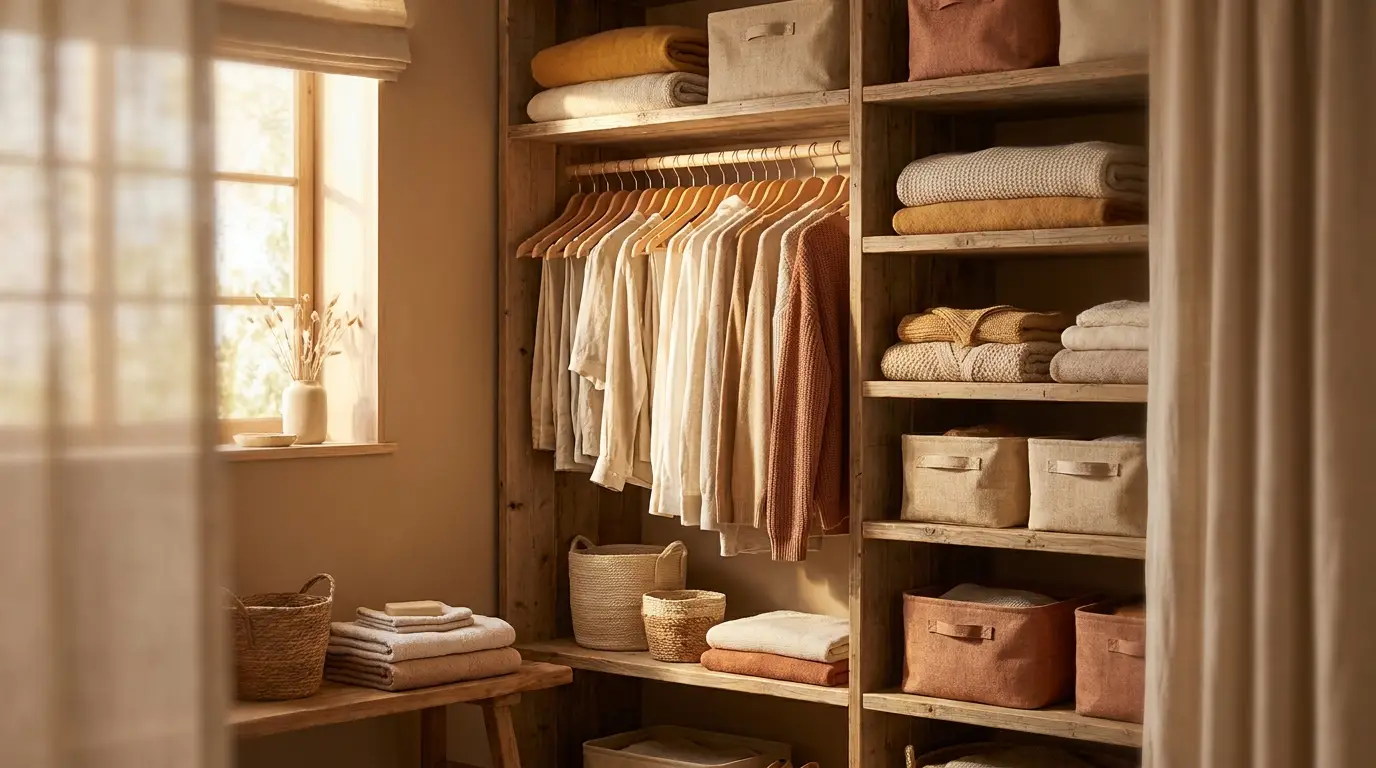
A small home rarely runs out of space. It runs out of used space. There is almost always a column of empty air beneath the hanging clothes, a blank door doing nothing, a gap beside the desk too narrow for furniture. The clutter is not proof there is no room — it is proof the room is not being claimed.
That reframing is the whole game. Before buying anything, the question is not "where can this go?" but "which empty space am I wasting?" Storage works when it fits a specific void exactly — so the wins come from finding those voids and filling them deliberately.
The real problem: wasted space, not missing space
Most cramped rooms are full of dead zones. A single closet rod leaves a meter of unused height below it. The back of every door is a flat surface holding nothing. Shelves stack a single layer deep while the air above each pile goes to waste. None of this reads as "available space," which is why it stays empty while the floor fills up.
The fix is to go after those zones one at a time — vertical first, since height is what small spaces have the most of and use the least.
Why it is worth solving
Living in a crowded home has a quiet daily cost: the friction of finding things, the stress of visible clutter, and the temptation to pay for a bigger place or an off-site storage unit. Reclaiming the space already there is far cheaper and immediate. A handful of well-chosen pieces can make a small apartment feel a size larger — without moving a wall or a box.
The categories that actually help
Six moves reclaim most wasted space: slim the hangers, build upward in the closet, claim the door, contain loose shelf items, stack instead of spread, and slide storage into the narrow gaps.
Amazon Basics Slim Velvet Hangers
- The problem it addresses
- Bulky plastic and wire hangers waste rod space and let clothes slip to the floor, so a closet looks full long before it really is.
- Why it may help
- Slim velvet hangers take a fraction of the width, so the same rod holds noticeably more, and the flocked surface keeps straps and shoulders from sliding off. One of the most-reviewed closet upgrades anywhere.
- Check before buying
- Count what you hang and buy a little extra; pick the style for your mix (suit, shirt, or clipped for skirts); a uniform set packs tighter and looks neater.
StorageWorks 6-Shelf Hanging Closet Organizer
- The problem it addresses
- Most closets have a single rod and a tall column of unused air beneath the hanging clothes.
- Why it may help
- A hanging shelf tower turns that empty vertical space into six compartments for folded sweaters, bags, or shoes — using the rod you already have, with no drilling or new furniture.
- Check before buying
- Measure the rod height and the column width; confirm the shelves clear what hangs in front; check the weight rating for heavier items.
Univivi 6-Shelf Over-Door Organizer
- The problem it addresses
- The back of a closet or bedroom door is dead space while shelves overflow a few feet away.
- Why it may help
- A fabric over-door organizer adds shelves to a surface that was doing nothing — ideal for accessories, supplies, or small items — and hangs over the door with no hardware.
- Check before buying
- Confirm the door thickness fits the hooks and that the door still closes; choose shelves or pockets for what you'll store; anchor the bottom so it doesn't swing.
Fabric Storage Baskets (3-pack)
- The problem it addresses
- Loose items on a shelf — scarves, chargers, linens, toys — slump into a mess and waste the shelf's full height.
- Why it may help
- Soft-sided bins group loose things into liftable units, so a shelf stays neat and every category has a home. Handles make a high shelf reachable, and they collapse flat when empty.
- Check before buying
- Measure the shelf depth and height so the bins fit snugly; pick a size that fills the space without wasting it; labels help when several look alike.
Stackable Closet Storage Baskets (5-pack)
- The problem it addresses
- A tall shelf or closet floor wastes the air above each pile because nothing stacks safely.
- Why it may help
- Stackable baskets build upward into stable tiers with front openings, so the lower items stay reachable. They turn a single shelf into several usable layers.
- Check before buying
- Confirm they interlock or stack securely; measure the total stacked height against the shelf; front access matters when you go more than two high.
TOOLF 3-Tier Rolling Cart
- The problem it addresses
- Narrow gaps — beside a desk, between the washer and wall, in a closet corner — are too small for furniture and end up wasted.
- Why it may help
- A slim rolling cart slides into those gaps and rolls out when needed, adding three tiers of mobile storage for supplies, pantry overflow, or bathroom extras. It goes where a fixed shelf can't.
- Check before buying
- Measure the gap width and the cart's footprint; check the tier height for what you'll store; locking casters help on hard floors.
A few buying considerations
- Go vertical first. Small spaces almost always have unused height — above the rod, on the door, up a shelf — before they run out of floor. Reclaim the air before adding furniture.
- Measure the void, not the product. Storage works when it fits a specific empty space exactly. Measure depth, height, and width before buying anything.
- Match the container to the item. Hangers for clothes, soft bins for loose goods, baskets and drawers for small items — the right format is what keeps it tidy over time.
- Edit before you store. The cheapest space gain is letting go of what you never use, then organizing only what remains.
The honest takeaway
A cramped home usually is not out of space — it is out of used space. The wins hide in the air above the rod, the back of the door, the gap beside the desk. Slim the hangers, build upward, claim the door, contain the loose items, and roll storage into the gaps. Measure carefully, edit honestly, and a small home quietly gets roomier — without moving a single wall.