Living with a shedding pet, with less mess
Living with a dog or cat does not have to mean living in their mess. The friction concentrates in a few predictable places — the shedding coat, the gulped meal, the accident, the shared sofa. A look at the fixes.
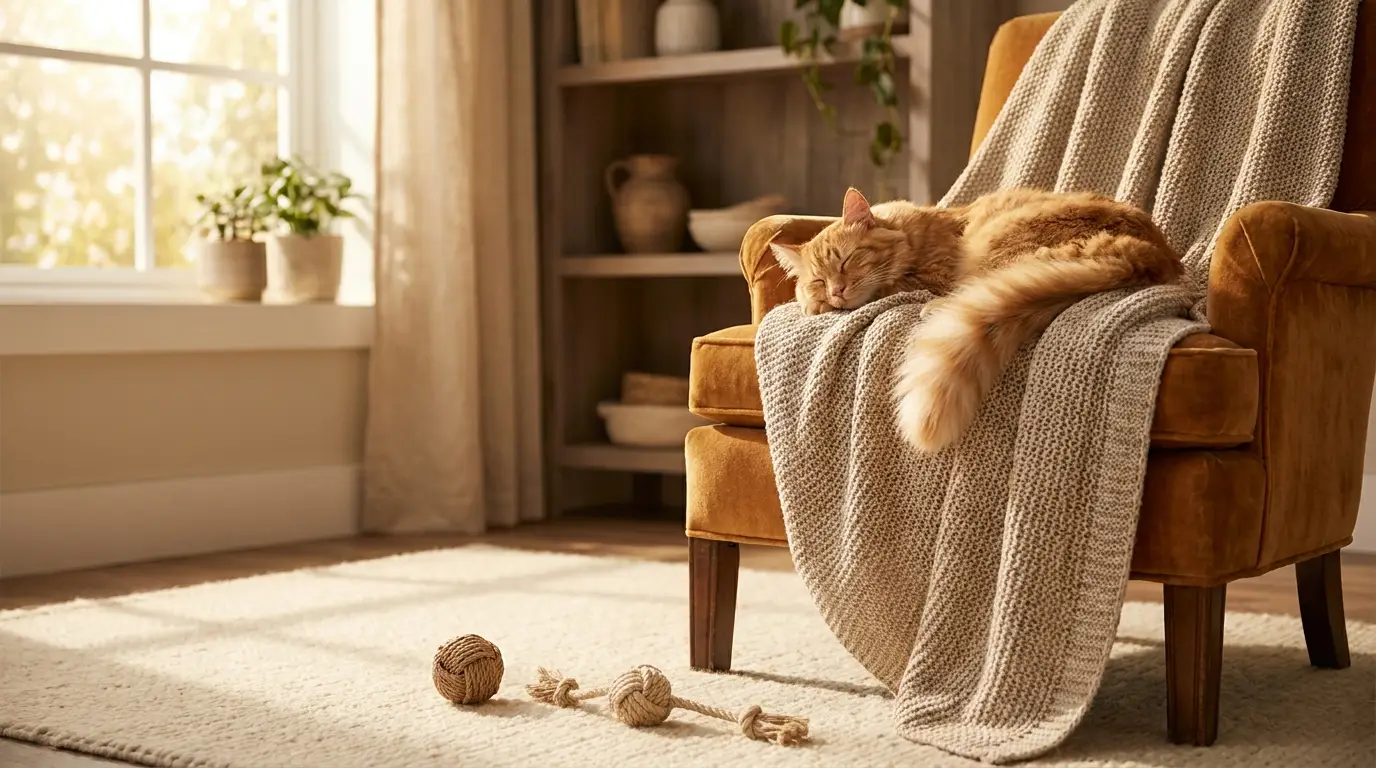
Sharing a home with a dog or cat is mostly wonderful and occasionally a losing battle with hair, spills, and the odd accident. The mess is real, but it is also predictable: it concentrates in a handful of spots — the shedding coat, the gulped meal, the still water bowl, the carpet accident, the feeding corner, the shared sofa. Each one has a simple, well-proven fix.
The mistake is trying to clean up after all of it with willpower and a vacuum. The better approach is to deal with mess at its source — pull the loose hair before it lands, let covers and mats absorb the rest, and treat odors so they actually leave. Do that, and a home stays comfortable for everyone in it.
The real problem: cleaning up after, instead of ahead
Most pet mess is managed reactively — sweeping hair, scrubbing the couch, masking a smell. That is endless, because the source keeps producing. A shedding coat keeps shedding; a fast eater keeps making a mess; an accident keeps drawing the pet back if the odor lingers. The leverage is upstream: remove the loose undercoat on a schedule, contain the feeding zone, protect the furniture, and neutralize odors chemically rather than covering them.
Why it is worth solving
Pet mess is a small daily tax — on time, on cleanliness, and sometimes on the furniture itself. Left unmanaged, it is also a quiet source of friction between loving a pet and keeping a nice home. A handful of inexpensive, well-chosen items removes most of that tax for years, which is a small price for a calmer, cleaner home and a healthier pet.
The categories that actually help
Six fixes cover most of the friction: deshed at the source, slow a fast eater, encourage drinking, neutralize accidents, contain the feeding mess, and protect shared furniture.
FURminator Undercoat deShedding Tool
- The problem it addresses
- A shedding coat leaves hair on every floor, sofa, and outfit, and a regular comb barely touches the loose undercoat where most shedding comes from.
- Why it may help
- A deshedding tool reaches the loose undercoat that normal brushes miss, pulling out the hair that would otherwise end up on the furniture — often dramatically less shedding after a few sessions. FURminator is the established name, with versions by coat length and for cats.
- Check before buying
- Match the tool to your pet's size and coat length (short vs. long hair); use it gently and not too often to avoid irritating the skin; brush outdoors when you can.
LE TAUCI Ceramic Slow Feeder Bowl
- The problem it addresses
- A pet that inhales its food gulps air and can bring it back up minutes later — a recurring mess and a real health concern.
- Why it may help
- The bowl's ridges force the pet to eat around them, stretching a meal from seconds to minutes, which eases digestion and the after-meal mess. Ceramic is heavier and more hygienic than thin plastic.
- Check before buying
- Match the bowl size and ridge spacing to your pet's snout and food type; ceramic is sturdier but breakable; confirm it is dishwasher-safe for easy cleaning.
PETLIBRO Stainless Steel Pet Water Fountain
- The problem it addresses
- Many pets, especially cats, do not drink enough from a still bowl, which can lead to health problems over time.
- Why it may help
- A circulating fountain keeps water moving and filtered, which encourages pets to drink more, and a stainless-steel basin is more hygienic and odor-resistant than plastic. A well-rated way to support hydration.
- Check before buying
- Stainless is easier to keep clean than plastic; budget for replacement filters; check the capacity for the number of pets and choose a quiet pump.
Biokleen Bac-Out Enzyme Stain & Odor Remover
- The problem it addresses
- Pet accidents leave odors that ordinary cleaners only mask, so the pet returns to the same spot and the smell comes back.
- Why it may help
- An enzyme cleaner breaks down the organic compounds behind stains and odor rather than covering them, removing the scent markers that draw a pet back. The honest fix for accidents on carpet and upholstery.
- Check before buying
- Test on an inconspicuous area first; enzymes need time to work, so keep the area damp as directed; avoid mixing with other cleaners that can deactivate the enzymes.
Hoki Found Waterproof Pet Feeding Mat
- The problem it addresses
- Splashed water and scattered kibble around the bowls leave a constant wet, crumby patch on the floor.
- Why it may help
- A raised-lip silicone mat catches spills and stray food and wipes clean in seconds, keeping the feeding area contained. One of the most-reviewed options in its category.
- Check before buying
- Pick a size that fits both bowls with room to spare; a raised lip contains water better; confirm it is non-slip on your floor type.
PetAmi Waterproof Furniture Cover
- The problem it addresses
- A pet that shares the sofa or bed leaves hair, dirt, and the occasional wet patch on furniture that is hard to clean.
- Why it may help
- A waterproof, washable cover takes the hair, paws, and spills instead of the upholstery, then goes straight into the laundry. Far easier than cleaning the couch itself, and it protects the furniture underneath.
- Check before buying
- Measure the furniture or area you want to cover; confirm it is machine-washable and the size fits; a non-slip backing keeps it in place.
A few buying considerations
- Tackle hair at the source. Regular deshedding removes far more hair than cleaning up after it does, which makes it the highest-leverage habit for a shedding pet.
- Protect, then clean. Covers and mats that absorb the mess are easier to maintain than repeatedly cleaning furniture and floors.
- Treat odor with enzymes, not perfume. Only enzyme cleaners remove the scent markers that cause repeat accidents; air fresheners just delay the problem.
- Match everything to your specific pet. Coat length, snout shape, bowl size, and furniture dimensions decide whether a product actually works.
The honest takeaway
Living with a dog or cat does not have to mean living in their mess. The friction concentrates in a few predictable places — the shedding coat, the gulped meal, the still water bowl, the accident, the feeding corner, the shared sofa — and each has a simple, well-proven fix. Deal with hair at the source, let covers and mats absorb the rest, and clean odors with enzymes, and the home stays comfortable for both ends of the leash.